 Jun 13, 2022·1 reply
@Scratchin_Bandit why did u get muted?
 Jun 13, 2022·2 replieskiddash3r
@Scratchin_Bandit why did u get muted?
They still havent told me..... Locked my last thread too

 Jun 13, 2022Scratchin Mamba
They still havent told me..... Locked my last thread too
 Jun 13, 2022·1 reply
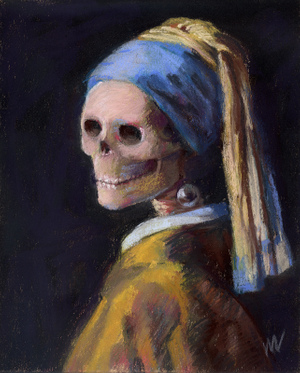
scratchin with his first AI generated post post-mute

 Jun 13, 2022·2 replies
Bro been interim president for 3 years


 Jun 13, 2022fun guy
scratchin with his first AI generated post post-mute
!https://youtu.be/i9kJJ9yhXNcThis such a classic
"I keep a pack of 100 wolves and If i don't feed em then they might turn on me Feel like I don't need em, I keep the best pedigree but hell I don't breed em"

- Jun 13, 2022SEGA GOON
Bro been interim president for 3 years
They need to give this up already
 s*** is embarrassing
 - Jun 13, 2022·1 reply
The hukuo system in China is crazy wtf
- Jun 13, 2022Scratchin Mamba
They still havent told me..... Locked my last thread too
S*** annoying, I never got told about mine either and it was for a week
- Jun 13, 2022Lein
The hukuo system in China is crazy wtf
Core periphery theory also applies within countries, even within cities, lets never forget

 Jun 14, 2022·2 replies
When these cryptofolk eventually lose everything they've put in, where do they go politically and socially?
They certainly are never going to blame the structure of crypto itself..
 Jun 14, 2022Lou
When these cryptofolk eventually lose everything they've put in, where do they go politically and socially?
They certainly are never going to blame the structure of crypto itself..
Fascism
- Jun 14, 2022·1 reply
This September the DPRK will be as old as the Soviet Union when it collapsed
- Jun 14, 2022Lein
This September the DPRK will be as old as the Soviet Union when it collapsed
The power of Juche necromancy
- Jun 14, 2022

- Jun 14, 2022
Cuba really got GOVERNMENT CONTROLLED WOKE CRITICAL RACE THEORY HIP HOP PROPAGANDA in their schools dam.
"Many primary schools address racial prejudice by talking with parents about how to engage with their children. In a 2014 study, the University of Toronto education professor Arlo Kempf showed how primary-school teachers in Cuba make family visits, helping parents talk about racial prejudice with their children. This is a relatively common, though not an officially mandated, practice; about a third of teachers make such visits.
Beyond the classroom walls, several hip-hop groups and grassroots activists have openly developed an anti-racism curriculum, signaling the government’s willingness to permit public discussion of racial issues. Some hip-hop groups are even registered with a national Cuban Rap Agency. The key community-outreach organization is Red Barrial Afrodescendiente (Afrodescendent Barrio Network), a group of Havana women who hold meetings to discuss racial realities and provide hands-on workshops for families. The leader, Hildelisa Leal Díaz, said the meetings give women a language to describe a racism they had never consciously named. In the Black Doll project, named for a José Martí short story, mothers and their children make paper-maché figures that are sometimes Afrocentric, such as the Yoruba Santería deity Yemaya."
- Jun 14, 2022
theatlantic.com/education/archive/2016/08/where-hip-hop-fits-in-cubas-anti-racist-curriculum/493682
Writer lib asf

I’d like to imagine President Obama having coffee in Magia López’s living room after he’s freed up in January and talking with Egea and other Cuban activists about how to promote educational exchange for social justice between the two countries. I’m sure he’d be interested.
But interesting article on anti-racism in Cuba's education system

- Jun 14, 2022·1 reply
Another article def worth reading^
"Across six days, the delegation visited trade unions, schools, a university and community organisations in Havana and Pinar del Rio.
From the first encounter to the last, it was clear that Cuba has taken deliberate steps to ensure that black and ethnic minority perspectives, and those of the Afro-Cuban community, are centrally referenced.
Cultural values, heritages and diversity are placed at the centre of the education experience for every Cuban.
We visited eight schools across Havana and Pinar del Rio, and were met by Cuban school leaders, teachers, and young students dressed immaculately in the white and red, or white and yellow school uniform worn by this age group throughout the country.
At the entrance of every education setting, on notice boards, displays and presentations, were colourful and creative historic accounts of Cuba.
We met government officials, teachers, head teachers, university lecturers and senior trade union officials who proudly identified as Afro-Cuban.
This was a complete reorientation of my expectations of the trip — seeing Afro Cuban knowledge, culture and representation celebrated and accepted within Cuban education as the norm.
The Cuban education system clearly promotes arts, music and dance at all levels and age groups, and we were repeatedly met by a choir demonstrating synchronised rhythms, harmonies and soul.
The artistry, sound and rhythm of Afro-Cuban art was a central theme to our travels, as a welcome, essential socio-cultural experience or as a parting gift, memorably by ballet, samba and chorister performance at the Music School in Pinar del Rio.
Whoever we met, cultural expression of art, spirituality, creativity and movement remained at the centre, acknowledged with pride as Afro-Cuban, but always Cuban.
This included the open duality of Cubans practicing Santeria, and worshipping Orisha, deities of the Yoruba (Nigerian) belief who are known and revered for specific characteristics.
It was hard for all delegates to comprehend the significance of the fact that we were in a nation where a quarter of the diverse population place, at their spiritual centre, African spiritual practices.
As a person of African descent, I believe the transatlantic slave trade is a common recent historical link that binds global communities together.
The legacy of enslavement in Cuba is often referenced in English and Welsh education spaces as a footnote to the history of the Cuban Revolution.
The work of the CDR was reminiscent of the black supplementary schools which was started in Britain in the mid-1960s, by African and African Caribbean communities.
My reasoning and connection with Jorge, a veteran of multiple community campaigns, offered further insight into how the Afro-Cuban experience is seen as not divisible from the Cuban experience.
The most powerful experiences of the delegation for me were when speaking with the Afro-Cuban communities in Pinar del Rio and Havana.
I was constantly offered and gladly reciprocated salutations of Rasta, with intergenerational members of the Afro-Cuban community offering love and respect for our blessed African heritage.
It was engaging in dialogue with “Eddie” that perhaps impacted most on my experiences in Cuba. Eddie shared honest youthful experiences where he and his friends shaved their dreadlocks off to avoid discrimination from employers and frequent challenges by police. He had two jobs, worked long hours and had little time to see his daughters.
We both acknowledged that there are unequal experiences in Cuba, with racism and discrimination a reality for the Afro-Cuban community, despite many legislative advances.
I asked Eddie about life as an Afro-Cuban. He told me clearly “life is hard here.” When I asked why, he answered simply: “El bloquero.”
For Eddie, the ongoing illegal United States commercial, economic and financial embargo against Cuba ensures that material, travel and exchange barriers are in place for every Cuban — without discrimination.
But despite the economic disadvantage faced through “El bloquero,” the true legacy of the revolution remains. Cuba is a nation that offers an educational experience which seeks to support every one of its communities"
- Jun 14, 2022·2 replies
Why do Maoists say that the USSR was socialist in the past, but became revisionist later on, but then say that Cuba isn't, or even worse, never was socialist lol?
I've seen Maoists call Cuba a "neocolony" of the USSR and that simply wasn't the case. Cuba did plenty of things that the Soviets didn't want them to do and vice versa, especially when it comes to foreign policy.
To me it just sounds like another case of people uncritically interpreting a geopolitical dispute as an ideological one.
- Jun 14, 2022Scratchin Mamba
Why do Maoists say that the USSR was socialist in the past, but became revisionist later on, but then say that Cuba isn't, or even worse, never was socialist lol?
I've seen Maoists call Cuba a "neocolony" of the USSR and that simply wasn't the case. Cuba did plenty of things that the Soviets didn't want them to do and vice versa, especially when it comes to foreign policy.
To me it just sounds like another case of people uncritically interpreting a geopolitical dispute as an ideological one.
Cuz dey haters
- Jun 14, 2022·1 reply
I'm trying to read Maoists articulate why Cuba isn't socialist and it's mostly that Cuba was a Soviet neocolony, and as evidence for that they'll use the same rhetoric of American cold warriors. They even say that the Soviets used Cuba as a proxy in Angola

Man even Kissinger admitted in his memoirs that that was a lie ffs
- Jun 14, 2022Lou
When these cryptofolk eventually lose everything they've put in, where do they go politically and socially?
They certainly are never going to blame the structure of crypto itself..
When libertarians lose money they just double down on being libertarian but find excuses to blame. Usually they just go more towards AnCap away from civil lib. Most of them aren’t actually politically inclined enough outside of monetary policy to care about or dedicate time to anything more specific. Even the obsession with crypto from 4chan/far right types was basically a residual leftover of the old 4chan Ron Paul libertarian streak that still exists in much of that space.
- Jun 14, 2022SEGA GOON
Bro been interim president for 3 years
 wonder what’s going on here since the US appeared to be shifting on Venezuela since the Russia s***
 Got a bad feeling about this