 Sep 2, 2022·2 replies
 americana
Imma do some praxis and get you some hoes
there’s a contradiction there between playing vic 3 and getting hoes
- Sep 2, 2022·1 replyWomanpuncher69
there’s a contradiction there between playing vic 3 and getting hoes
Get you one of them gamer girls
- Sep 2, 2022
 Lein
LeinI'm always saying this
https://twitter.com/SouthAsiaIndex/status/1565319031028154368Lmao of course
- Sep 2, 2022SEGA GOON
Get you one of them gamer girls
Nah cap
- Sep 2, 2022Womanpuncher69
there’s a contradiction there between playing vic 3 and getting hoes
Can’t relate
- Sep 2, 2022krishna bound
okay bear with me here because this is going to be a really long post lol
fascism is an incredibly complicated ideology because throughout history its implementation and popular actors have been influenced more by historical factors than they by the actual ideology itself. it is incredibly complicated to even begin to dissect because the history is linked to the ideology itself in terms of discussion.because of this there really isn't a great example of what "fascism" means; virtually everyone to get near the term as a ruling class interpreted it idiosyncratically or were cross-influenced by others who basically forced the ideology in a certain direction.
to begin with, the original idea of fascism is itself distinct historically; there are basically a handful of distinct ideologies which originated the term which create confusion. Before getting into that, the first thing which is important to understand is there have always been two roots lineages of fascism; that of integral nationalism, or that which believes in counter-revolutionary theory, and that of revolutionary revolt. This confusing and highly distinct set of lineages sometimes crossed lines or cross-influenced each other despite being diametrically opposed philosophically, which is one reason much of the emerging fascist states of the 20th century were so ideologically scattered and nonsensical. At its core, the idea of fascism is relatively simple: the order at which the world works naturally is detrimental, and humans must disrupt natural order. The belief is that the full line of human history and lineage has essentially stagnated or been a mistake, and thus has resulted in a broken society. The idea is that ALL ideology and ALL politics and ALL systems resulting from such are intrinsically broken, and the purpose is to disrupt the order of such to re-create a nation which is fully distinct from the boundaries, ideas, politics, etc. of the old world. Especially post-industrialization and the state of the world in the 19th-20th century, you can see how this was increasingly appealing.
Fascists at their core reject the enlightenment and every derivative of such - this is why as I've mentioned in other threads the Dadaists were fascists. Absurdism & Nihilism are the core proponents of fascism; the ideology fundamentally cannot be understood without knowing this. I will get to the points about religion and culture in a bit. It's also incredibly important to note that there's a reason many of the people who eventually became fascists were originally anarchists or even loosely socialist. There is indeed semantically a common goal albeit not in practice, and there is actually a large overlap of anarchist theory with fascist theory - beyond the acknowledgement of nihilism, this is also historically because one of the two root lineages of Fascism in part stems from the French Revolution; many of the early fascists were Sorellians (and why Sorel is considered a proto-fascist), or even non-orthodox Marxists, and cited the same ideas as syndicalists and proto-anarchists. The reason fascists ideologically came to despise communism is because they believed it was simply a re-organization of capitalism; fascists do not believe in anything. They do not think there should be an economy for example. They do not believe in material society because they think material society only exists as a fabrication, and because society has dictacted such; thus they believe abolishing society they could restructure things under a means where material distinctions or class conflict simply does not exist at all.They believe all aspects of society is fabricated - as such much of the original absurdism that inspired fascist philosophy is ironically that which later can be seen in post-structuralism under a different lens and interpretation.
That is, that everything is interpreted, everything is detached, and just as everything is fabricated, everything can be re-fabricated with the right political tools and populism of the people. Fascists also hate the bourgeois because while they don't care about economics on an intrinsic level, they do not actually reject dialectics inherently; it's just that instead believe that dialectics only exist as a fabricated means of which if the bourgeois did not exist, the dialectic would also cease to exist because the bourgeois are the ones driving simultaneously the contradictions of culture (which they believe is of utmost importance) and hoarding the wealth of which determines culture to begin with. Fascists were of course, essentially idealistically utopian, and represented a flip coin side of a ultra-nihilistic post-structural (again, historically before post-structuralism, but still) anarchism where instead of believing the best means of dealing with this is a reversion to syndicalized tribes and anti-nation building, instead the best solution was to rebuild society under a means where contradictions simply did not exist and culture could thrive, since the belief was culture is the greatest apparatus of stability and the sole thing that keeps humans from delving into suicidal nihilism. There is no specific framework for fascism and no intrinsic political idealism; the core idea is simply "who gives a s*** if everything is fake, economics is fake, politics is fake, the government is fake, geopolitical relations are fake, the only thing that matters is the population being stable and our culture overcoming nihilism".
This is simultaneously why, as you can probably imagine, Fascism went into hundreds of incredibly distinct inconceivable directions - there is no again actual political belief, it is entirely obsessed with philosophy and carrying out philosophical ideals.Fascism can affirm anything which it thinks can achieve this goal; original fascists supported syndicalism because they thought a post-syndicalist union-based society would best achieve this goal. Some fascists supported the monarchy or religious totalitarianism for the reasons below. I also would add that there is a reason fascists did not care about race originally - it is because they rejected race as a post-enlightenment fabrication. In order to rebuild their utopian society, they believed identity should be defined by shared culture under the guise of nationalism; this can actually be seen in early italian fascist or french fascieu policy for example. You can also probably see how similarly the obsession with overcoming societal nihilism lead to the obsession with futurism.
Back to the original "two root lineages", this is basically what lead to the split of counter-revolutionary vs revolutionary theory. If you believe everything is fabricated, there are essentially only two logical end-goals:
1) If everything is meaningless, then the preservation of life as we know it is more important than anything, because with the acknowledgement of absurdism, we are subject to infinite change, and infinite change will disrupt life, because we can only place meaning ultimately in what we know. these are the types who flocked to integralism, monarchism, etc. - this lineage was supposed to have been discarded once the latter was created but the counter-revolutionary branch of the ideology kept it; the same way that Marxists would consider these people reactionary, actual early Fascists would too, albeit under a different word.
2) If everything is meaningless, we must abolish all that we know, and create a society which creates meaning. these are the types who overlapped often with emerging anarchist theory and were the dadaists. the influence here was way more broad - this even influenced non-fascists such as Salazar for example who thought the abolishment of all politics was the only way to best rule a country, and make decisions according to the people rather than according law or economicsnow with that said, i have to note that the historical emergence of fascism was incredibly complicated. Nazi germany, which is the current touchstone for fascism, emerged out of a weird mixture of the above two lineages. This is largely because Nazi Germany was reactionary and took ideas from tons of inconsistent and unequivocal sources; the idea of Nazism was a synthesis of societal reactions essentially compressed together. The understand of marxists ideas of fascism is essentially nazism, despite Nazism not actually being a lineage of fascism - the origin of Nazism was a idiosyncratic mishmash of reactionary and counter-revolutionary ideas mixed with Volkisch Nationalism - something which actual original fascists would have abhorred. There are indeed overlaps which later happened historically and ideologically, but I'd note that this is because Nazism is not a real belief system. Almost every nazi philosopher disagreed. Spengler, Schmitt, Stapel, Strasser, Rosenberg, and even esoteric root philosophers like Evola and Weininger rarely overlapped and pushed and pulled in arbitrary directions. Were they a nationalist party seeking identitarian rebirth? A party espousing a resurrective spiritualism? Were they an economic means of upholding cultural virtue? Were they revolutionary? Anti-revolutionary? Atheistic? Spiritual? None of them would agree. But they became virtually the most powerful country in the Axis and their meaningelss policy came to dominate countries like Italy which had no choice but to bend to them - after all, how could a country that literally did not even believe in economics succeed? Meanwhile you can see how the influence of the above lineage 1 influenced someone like Franco.
sorry would write more but im a bit burnt out and this is like legit writing a full on dissertation because of how complicated of a topic this is might come back in a few days and finish writing it or turn it into a substack post or something
- Sep 2, 2022krishna bound
okay bear with me here because this is going to be a really long post lol
fascism is an incredibly complicated ideology because throughout history its implementation and popular actors have been influenced more by historical factors than they by the actual ideology itself. it is incredibly complicated to even begin to dissect because the history is linked to the ideology itself in terms of discussion.because of this there really isn't a great example of what "fascism" means; virtually everyone to get near the term as a ruling class interpreted it idiosyncratically or were cross-influenced by others who basically forced the ideology in a certain direction.
to begin with, the original idea of fascism is itself distinct historically; there are basically a handful of distinct ideologies which originated the term which create confusion. Before getting into that, the first thing which is important to understand is there have always been two roots lineages of fascism; that of integral nationalism, or that which believes in counter-revolutionary theory, and that of revolutionary revolt. This confusing and highly distinct set of lineages sometimes crossed lines or cross-influenced each other despite being diametrically opposed philosophically, which is one reason much of the emerging fascist states of the 20th century were so ideologically scattered and nonsensical. At its core, the idea of fascism is relatively simple: the order at which the world works naturally is detrimental, and humans must disrupt natural order. The belief is that the full line of human history and lineage has essentially stagnated or been a mistake, and thus has resulted in a broken society. The idea is that ALL ideology and ALL politics and ALL systems resulting from such are intrinsically broken, and the purpose is to disrupt the order of such to re-create a nation which is fully distinct from the boundaries, ideas, politics, etc. of the old world. Especially post-industrialization and the state of the world in the 19th-20th century, you can see how this was increasingly appealing.
Fascists at their core reject the enlightenment and every derivative of such - this is why as I've mentioned in other threads the Dadaists were fascists. Absurdism & Nihilism are the core proponents of fascism; the ideology fundamentally cannot be understood without knowing this. I will get to the points about religion and culture in a bit. It's also incredibly important to note that there's a reason many of the people who eventually became fascists were originally anarchists or even loosely socialist. There is indeed semantically a common goal albeit not in practice, and there is actually a large overlap of anarchist theory with fascist theory - beyond the acknowledgement of nihilism, this is also historically because one of the two root lineages of Fascism in part stems from the French Revolution; many of the early fascists were Sorellians (and why Sorel is considered a proto-fascist), or even non-orthodox Marxists, and cited the same ideas as syndicalists and proto-anarchists. The reason fascists ideologically came to despise communism is because they believed it was simply a re-organization of capitalism; fascists do not believe in anything. They do not think there should be an economy for example. They do not believe in material society because they think material society only exists as a fabrication, and because society has dictacted such; thus they believe abolishing society they could restructure things under a means where material distinctions or class conflict simply does not exist at all.They believe all aspects of society is fabricated - as such much of the original absurdism that inspired fascist philosophy is ironically that which later can be seen in post-structuralism under a different lens and interpretation.
That is, that everything is interpreted, everything is detached, and just as everything is fabricated, everything can be re-fabricated with the right political tools and populism of the people. Fascists also hate the bourgeois because while they don't care about economics on an intrinsic level, they do not actually reject dialectics inherently; it's just that instead believe that dialectics only exist as a fabricated means of which if the bourgeois did not exist, the dialectic would also cease to exist because the bourgeois are the ones driving simultaneously the contradictions of culture (which they believe is of utmost importance) and hoarding the wealth of which determines culture to begin with. Fascists were of course, essentially idealistically utopian, and represented a flip coin side of a ultra-nihilistic post-structural (again, historically before post-structuralism, but still) anarchism where instead of believing the best means of dealing with this is a reversion to syndicalized tribes and anti-nation building, instead the best solution was to rebuild society under a means where contradictions simply did not exist and culture could thrive, since the belief was culture is the greatest apparatus of stability and the sole thing that keeps humans from delving into suicidal nihilism. There is no specific framework for fascism and no intrinsic political idealism; the core idea is simply "who gives a s*** if everything is fake, economics is fake, politics is fake, the government is fake, geopolitical relations are fake, the only thing that matters is the population being stable and our culture overcoming nihilism".
This is simultaneously why, as you can probably imagine, Fascism went into hundreds of incredibly distinct inconceivable directions - there is no again actual political belief, it is entirely obsessed with philosophy and carrying out philosophical ideals.Fascism can affirm anything which it thinks can achieve this goal; original fascists supported syndicalism because they thought a post-syndicalist union-based society would best achieve this goal. Some fascists supported the monarchy or religious totalitarianism for the reasons below. I also would add that there is a reason fascists did not care about race originally - it is because they rejected race as a post-enlightenment fabrication. In order to rebuild their utopian society, they believed identity should be defined by shared culture under the guise of nationalism; this can actually be seen in early italian fascist or french fascieu policy for example. You can also probably see how similarly the obsession with overcoming societal nihilism lead to the obsession with futurism.
Back to the original "two root lineages", this is basically what lead to the split of counter-revolutionary vs revolutionary theory. If you believe everything is fabricated, there are essentially only two logical end-goals:
1) If everything is meaningless, then the preservation of life as we know it is more important than anything, because with the acknowledgement of absurdism, we are subject to infinite change, and infinite change will disrupt life, because we can only place meaning ultimately in what we know. these are the types who flocked to integralism, monarchism, etc. - this lineage was supposed to have been discarded once the latter was created but the counter-revolutionary branch of the ideology kept it; the same way that Marxists would consider these people reactionary, actual early Fascists would too, albeit under a different word.
2) If everything is meaningless, we must abolish all that we know, and create a society which creates meaning. these are the types who overlapped often with emerging anarchist theory and were the dadaists. the influence here was way more broad - this even influenced non-fascists such as Salazar for example who thought the abolishment of all politics was the only way to best rule a country, and make decisions according to the people rather than according law or economicsnow with that said, i have to note that the historical emergence of fascism was incredibly complicated. Nazi germany, which is the current touchstone for fascism, emerged out of a weird mixture of the above two lineages. This is largely because Nazi Germany was reactionary and took ideas from tons of inconsistent and unequivocal sources; the idea of Nazism was a synthesis of societal reactions essentially compressed together. The understand of marxists ideas of fascism is essentially nazism, despite Nazism not actually being a lineage of fascism - the origin of Nazism was a idiosyncratic mishmash of reactionary and counter-revolutionary ideas mixed with Volkisch Nationalism - something which actual original fascists would have abhorred. There are indeed overlaps which later happened historically and ideologically, but I'd note that this is because Nazism is not a real belief system. Almost every nazi philosopher disagreed. Spengler, Schmitt, Stapel, Strasser, Rosenberg, and even esoteric root philosophers like Evola and Weininger rarely overlapped and pushed and pulled in arbitrary directions. Were they a nationalist party seeking identitarian rebirth? A party espousing a resurrective spiritualism? Were they an economic means of upholding cultural virtue? Were they revolutionary? Anti-revolutionary? Atheistic? Spiritual? None of them would agree. But they became virtually the most powerful country in the Axis and their meaningelss policy came to dominate countries like Italy which had no choice but to bend to them - after all, how could a country that literally did not even believe in economics succeed? Meanwhile you can see how the influence of the above lineage 1 influenced someone like Franco.
sorry would write more but im a bit burnt out and this is like legit writing a full on dissertation because of how complicated of a topic this is might come back in a few days and finish writing it or turn it into a substack post or something
- Sep 2, 2022·1 reply
crine
- Sep 2, 2022Womanpuncher69
crine
LMAOOO
 Sep 2, 2022
@americana @Womanpuncher69 thank you, read this previously, very good post. Have some follow ups on it I’ll ask tomorrow
 Sep 2, 2022·1 replykrishna bound
okay bear with me here because this is going to be a really long post lol
fascism is an incredibly complicated ideology because throughout history its implementation and popular actors have been influenced more by historical factors than they by the actual ideology itself. it is incredibly complicated to even begin to dissect because the history is linked to the ideology itself in terms of discussion.because of this there really isn't a great example of what "fascism" means; virtually everyone to get near the term as a ruling class interpreted it idiosyncratically or were cross-influenced by others who basically forced the ideology in a certain direction.
to begin with, the original idea of fascism is itself distinct historically; there are basically a handful of distinct ideologies which originated the term which create confusion. Before getting into that, the first thing which is important to understand is there have always been two roots lineages of fascism; that of integral nationalism, or that which believes in counter-revolutionary theory, and that of revolutionary revolt. This confusing and highly distinct set of lineages sometimes crossed lines or cross-influenced each other despite being diametrically opposed philosophically, which is one reason much of the emerging fascist states of the 20th century were so ideologically scattered and nonsensical. At its core, the idea of fascism is relatively simple: the order at which the world works naturally is detrimental, and humans must disrupt natural order. The belief is that the full line of human history and lineage has essentially stagnated or been a mistake, and thus has resulted in a broken society. The idea is that ALL ideology and ALL politics and ALL systems resulting from such are intrinsically broken, and the purpose is to disrupt the order of such to re-create a nation which is fully distinct from the boundaries, ideas, politics, etc. of the old world. Especially post-industrialization and the state of the world in the 19th-20th century, you can see how this was increasingly appealing.
Fascists at their core reject the enlightenment and every derivative of such - this is why as I've mentioned in other threads the Dadaists were fascists. Absurdism & Nihilism are the core proponents of fascism; the ideology fundamentally cannot be understood without knowing this. I will get to the points about religion and culture in a bit. It's also incredibly important to note that there's a reason many of the people who eventually became fascists were originally anarchists or even loosely socialist. There is indeed semantically a common goal albeit not in practice, and there is actually a large overlap of anarchist theory with fascist theory - beyond the acknowledgement of nihilism, this is also historically because one of the two root lineages of Fascism in part stems from the French Revolution; many of the early fascists were Sorellians (and why Sorel is considered a proto-fascist), or even non-orthodox Marxists, and cited the same ideas as syndicalists and proto-anarchists. The reason fascists ideologically came to despise communism is because they believed it was simply a re-organization of capitalism; fascists do not believe in anything. They do not think there should be an economy for example. They do not believe in material society because they think material society only exists as a fabrication, and because society has dictacted such; thus they believe abolishing society they could restructure things under a means where material distinctions or class conflict simply does not exist at all.They believe all aspects of society is fabricated - as such much of the original absurdism that inspired fascist philosophy is ironically that which later can be seen in post-structuralism under a different lens and interpretation.
That is, that everything is interpreted, everything is detached, and just as everything is fabricated, everything can be re-fabricated with the right political tools and populism of the people. Fascists also hate the bourgeois because while they don't care about economics on an intrinsic level, they do not actually reject dialectics inherently; it's just that instead believe that dialectics only exist as a fabricated means of which if the bourgeois did not exist, the dialectic would also cease to exist because the bourgeois are the ones driving simultaneously the contradictions of culture (which they believe is of utmost importance) and hoarding the wealth of which determines culture to begin with. Fascists were of course, essentially idealistically utopian, and represented a flip coin side of a ultra-nihilistic post-structural (again, historically before post-structuralism, but still) anarchism where instead of believing the best means of dealing with this is a reversion to syndicalized tribes and anti-nation building, instead the best solution was to rebuild society under a means where contradictions simply did not exist and culture could thrive, since the belief was culture is the greatest apparatus of stability and the sole thing that keeps humans from delving into suicidal nihilism. There is no specific framework for fascism and no intrinsic political idealism; the core idea is simply "who gives a s*** if everything is fake, economics is fake, politics is fake, the government is fake, geopolitical relations are fake, the only thing that matters is the population being stable and our culture overcoming nihilism".
This is simultaneously why, as you can probably imagine, Fascism went into hundreds of incredibly distinct inconceivable directions - there is no again actual political belief, it is entirely obsessed with philosophy and carrying out philosophical ideals.Fascism can affirm anything which it thinks can achieve this goal; original fascists supported syndicalism because they thought a post-syndicalist union-based society would best achieve this goal. Some fascists supported the monarchy or religious totalitarianism for the reasons below. I also would add that there is a reason fascists did not care about race originally - it is because they rejected race as a post-enlightenment fabrication. In order to rebuild their utopian society, they believed identity should be defined by shared culture under the guise of nationalism; this can actually be seen in early italian fascist or french fascieu policy for example. You can also probably see how similarly the obsession with overcoming societal nihilism lead to the obsession with futurism.
Back to the original "two root lineages", this is basically what lead to the split of counter-revolutionary vs revolutionary theory. If you believe everything is fabricated, there are essentially only two logical end-goals:
1) If everything is meaningless, then the preservation of life as we know it is more important than anything, because with the acknowledgement of absurdism, we are subject to infinite change, and infinite change will disrupt life, because we can only place meaning ultimately in what we know. these are the types who flocked to integralism, monarchism, etc. - this lineage was supposed to have been discarded once the latter was created but the counter-revolutionary branch of the ideology kept it; the same way that Marxists would consider these people reactionary, actual early Fascists would too, albeit under a different word.
2) If everything is meaningless, we must abolish all that we know, and create a society which creates meaning. these are the types who overlapped often with emerging anarchist theory and were the dadaists. the influence here was way more broad - this even influenced non-fascists such as Salazar for example who thought the abolishment of all politics was the only way to best rule a country, and make decisions according to the people rather than according law or economicsnow with that said, i have to note that the historical emergence of fascism was incredibly complicated. Nazi germany, which is the current touchstone for fascism, emerged out of a weird mixture of the above two lineages. This is largely because Nazi Germany was reactionary and took ideas from tons of inconsistent and unequivocal sources; the idea of Nazism was a synthesis of societal reactions essentially compressed together. The understand of marxists ideas of fascism is essentially nazism, despite Nazism not actually being a lineage of fascism - the origin of Nazism was a idiosyncratic mishmash of reactionary and counter-revolutionary ideas mixed with Volkisch Nationalism - something which actual original fascists would have abhorred. There are indeed overlaps which later happened historically and ideologically, but I'd note that this is because Nazism is not a real belief system. Almost every nazi philosopher disagreed. Spengler, Schmitt, Stapel, Strasser, Rosenberg, and even esoteric root philosophers like Evola and Weininger rarely overlapped and pushed and pulled in arbitrary directions. Were they a nationalist party seeking identitarian rebirth? A party espousing a resurrective spiritualism? Were they an economic means of upholding cultural virtue? Were they revolutionary? Anti-revolutionary? Atheistic? Spiritual? None of them would agree. But they became virtually the most powerful country in the Axis and their meaningelss policy came to dominate countries like Italy which had no choice but to bend to them - after all, how could a country that literally did not even believe in economics succeed? Meanwhile you can see how the influence of the above lineage 1 influenced someone like Franco.
sorry would write more but im a bit burnt out and this is like legit writing a full on dissertation because of how complicated of a topic this is might come back in a few days and finish writing it or turn it into a substack post or something
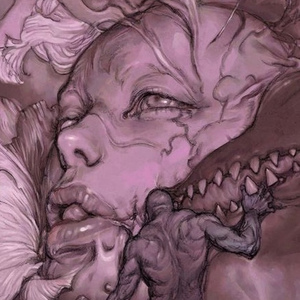
We need Selected Works of krishna bound fr.
Imagine opening up the front cover and just seeing this portrait

 Sep 2, 2022·1 reply
krishna probably wrote the longest posts on this website
- Sep 2, 2022emo genghis khan
krishna probably wrote the longest posts on this website
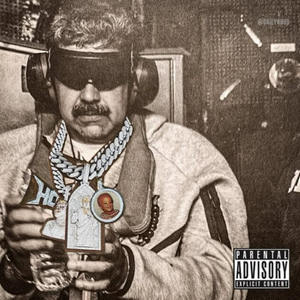
its his fetish and we just indulge him in it
 Sep 2, 2022
In fact, drawing racial ties to ancient Greek culture was seen as necessary to the national narrative, as Hitler was unimpressed with the cultural works of Germanic tribes at the time, saying, "if anyone asks us about our ancestors, we should continually allude to the ancient Greeks."

- Sep 2, 2022krishna bound
okay bear with me here because this is going to be a really long post lol
fascism is an incredibly complicated ideology because throughout history its implementation and popular actors have been influenced more by historical factors than they by the actual ideology itself. it is incredibly complicated to even begin to dissect because the history is linked to the ideology itself in terms of discussion.because of this there really isn't a great example of what "fascism" means; virtually everyone to get near the term as a ruling class interpreted it idiosyncratically or were cross-influenced by others who basically forced the ideology in a certain direction.
to begin with, the original idea of fascism is itself distinct historically; there are basically a handful of distinct ideologies which originated the term which create confusion. Before getting into that, the first thing which is important to understand is there have always been two roots lineages of fascism; that of integral nationalism, or that which believes in counter-revolutionary theory, and that of revolutionary revolt. This confusing and highly distinct set of lineages sometimes crossed lines or cross-influenced each other despite being diametrically opposed philosophically, which is one reason much of the emerging fascist states of the 20th century were so ideologically scattered and nonsensical. At its core, the idea of fascism is relatively simple: the order at which the world works naturally is detrimental, and humans must disrupt natural order. The belief is that the full line of human history and lineage has essentially stagnated or been a mistake, and thus has resulted in a broken society. The idea is that ALL ideology and ALL politics and ALL systems resulting from such are intrinsically broken, and the purpose is to disrupt the order of such to re-create a nation which is fully distinct from the boundaries, ideas, politics, etc. of the old world. Especially post-industrialization and the state of the world in the 19th-20th century, you can see how this was increasingly appealing.
Fascists at their core reject the enlightenment and every derivative of such - this is why as I've mentioned in other threads the Dadaists were fascists. Absurdism & Nihilism are the core proponents of fascism; the ideology fundamentally cannot be understood without knowing this. I will get to the points about religion and culture in a bit. It's also incredibly important to note that there's a reason many of the people who eventually became fascists were originally anarchists or even loosely socialist. There is indeed semantically a common goal albeit not in practice, and there is actually a large overlap of anarchist theory with fascist theory - beyond the acknowledgement of nihilism, this is also historically because one of the two root lineages of Fascism in part stems from the French Revolution; many of the early fascists were Sorellians (and why Sorel is considered a proto-fascist), or even non-orthodox Marxists, and cited the same ideas as syndicalists and proto-anarchists. The reason fascists ideologically came to despise communism is because they believed it was simply a re-organization of capitalism; fascists do not believe in anything. They do not think there should be an economy for example. They do not believe in material society because they think material society only exists as a fabrication, and because society has dictacted such; thus they believe abolishing society they could restructure things under a means where material distinctions or class conflict simply does not exist at all.They believe all aspects of society is fabricated - as such much of the original absurdism that inspired fascist philosophy is ironically that which later can be seen in post-structuralism under a different lens and interpretation.
That is, that everything is interpreted, everything is detached, and just as everything is fabricated, everything can be re-fabricated with the right political tools and populism of the people. Fascists also hate the bourgeois because while they don't care about economics on an intrinsic level, they do not actually reject dialectics inherently; it's just that instead believe that dialectics only exist as a fabricated means of which if the bourgeois did not exist, the dialectic would also cease to exist because the bourgeois are the ones driving simultaneously the contradictions of culture (which they believe is of utmost importance) and hoarding the wealth of which determines culture to begin with. Fascists were of course, essentially idealistically utopian, and represented a flip coin side of a ultra-nihilistic post-structural (again, historically before post-structuralism, but still) anarchism where instead of believing the best means of dealing with this is a reversion to syndicalized tribes and anti-nation building, instead the best solution was to rebuild society under a means where contradictions simply did not exist and culture could thrive, since the belief was culture is the greatest apparatus of stability and the sole thing that keeps humans from delving into suicidal nihilism. There is no specific framework for fascism and no intrinsic political idealism; the core idea is simply "who gives a s*** if everything is fake, economics is fake, politics is fake, the government is fake, geopolitical relations are fake, the only thing that matters is the population being stable and our culture overcoming nihilism".
This is simultaneously why, as you can probably imagine, Fascism went into hundreds of incredibly distinct inconceivable directions - there is no again actual political belief, it is entirely obsessed with philosophy and carrying out philosophical ideals.Fascism can affirm anything which it thinks can achieve this goal; original fascists supported syndicalism because they thought a post-syndicalist union-based society would best achieve this goal. Some fascists supported the monarchy or religious totalitarianism for the reasons below. I also would add that there is a reason fascists did not care about race originally - it is because they rejected race as a post-enlightenment fabrication. In order to rebuild their utopian society, they believed identity should be defined by shared culture under the guise of nationalism; this can actually be seen in early italian fascist or french fascieu policy for example. You can also probably see how similarly the obsession with overcoming societal nihilism lead to the obsession with futurism.
Back to the original "two root lineages", this is basically what lead to the split of counter-revolutionary vs revolutionary theory. If you believe everything is fabricated, there are essentially only two logical end-goals:
1) If everything is meaningless, then the preservation of life as we know it is more important than anything, because with the acknowledgement of absurdism, we are subject to infinite change, and infinite change will disrupt life, because we can only place meaning ultimately in what we know. these are the types who flocked to integralism, monarchism, etc. - this lineage was supposed to have been discarded once the latter was created but the counter-revolutionary branch of the ideology kept it; the same way that Marxists would consider these people reactionary, actual early Fascists would too, albeit under a different word.
2) If everything is meaningless, we must abolish all that we know, and create a society which creates meaning. these are the types who overlapped often with emerging anarchist theory and were the dadaists. the influence here was way more broad - this even influenced non-fascists such as Salazar for example who thought the abolishment of all politics was the only way to best rule a country, and make decisions according to the people rather than according law or economicsnow with that said, i have to note that the historical emergence of fascism was incredibly complicated. Nazi germany, which is the current touchstone for fascism, emerged out of a weird mixture of the above two lineages. This is largely because Nazi Germany was reactionary and took ideas from tons of inconsistent and unequivocal sources; the idea of Nazism was a synthesis of societal reactions essentially compressed together. The understand of marxists ideas of fascism is essentially nazism, despite Nazism not actually being a lineage of fascism - the origin of Nazism was a idiosyncratic mishmash of reactionary and counter-revolutionary ideas mixed with Volkisch Nationalism - something which actual original fascists would have abhorred. There are indeed overlaps which later happened historically and ideologically, but I'd note that this is because Nazism is not a real belief system. Almost every nazi philosopher disagreed. Spengler, Schmitt, Stapel, Strasser, Rosenberg, and even esoteric root philosophers like Evola and Weininger rarely overlapped and pushed and pulled in arbitrary directions. Were they a nationalist party seeking identitarian rebirth? A party espousing a resurrective spiritualism? Were they an economic means of upholding cultural virtue? Were they revolutionary? Anti-revolutionary? Atheistic? Spiritual? None of them would agree. But they became virtually the most powerful country in the Axis and their meaningelss policy came to dominate countries like Italy which had no choice but to bend to them - after all, how could a country that literally did not even believe in economics succeed? Meanwhile you can see how the influence of the above lineage 1 influenced someone like Franco.
sorry would write more but im a bit burnt out and this is like legit writing a full on dissertation because of how complicated of a topic this is might come back in a few days and finish writing it or turn it into a substack post or something

- Sep 2, 2022·1 replykrishna bound
okay bear with me here because this is going to be a really long post lol
fascism is an incredibly complicated ideology because throughout history its implementation and popular actors have been influenced more by historical factors than they by the actual ideology itself. it is incredibly complicated to even begin to dissect because the history is linked to the ideology itself in terms of discussion.because of this there really isn't a great example of what "fascism" means; virtually everyone to get near the term as a ruling class interpreted it idiosyncratically or were cross-influenced by others who basically forced the ideology in a certain direction.
to begin with, the original idea of fascism is itself distinct historically; there are basically a handful of distinct ideologies which originated the term which create confusion. Before getting into that, the first thing which is important to understand is there have always been two roots lineages of fascism; that of integral nationalism, or that which believes in counter-revolutionary theory, and that of revolutionary revolt. This confusing and highly distinct set of lineages sometimes crossed lines or cross-influenced each other despite being diametrically opposed philosophically, which is one reason much of the emerging fascist states of the 20th century were so ideologically scattered and nonsensical. At its core, the idea of fascism is relatively simple: the order at which the world works naturally is detrimental, and humans must disrupt natural order. The belief is that the full line of human history and lineage has essentially stagnated or been a mistake, and thus has resulted in a broken society. The idea is that ALL ideology and ALL politics and ALL systems resulting from such are intrinsically broken, and the purpose is to disrupt the order of such to re-create a nation which is fully distinct from the boundaries, ideas, politics, etc. of the old world. Especially post-industrialization and the state of the world in the 19th-20th century, you can see how this was increasingly appealing.
Fascists at their core reject the enlightenment and every derivative of such - this is why as I've mentioned in other threads the Dadaists were fascists. Absurdism & Nihilism are the core proponents of fascism; the ideology fundamentally cannot be understood without knowing this. I will get to the points about religion and culture in a bit. It's also incredibly important to note that there's a reason many of the people who eventually became fascists were originally anarchists or even loosely socialist. There is indeed semantically a common goal albeit not in practice, and there is actually a large overlap of anarchist theory with fascist theory - beyond the acknowledgement of nihilism, this is also historically because one of the two root lineages of Fascism in part stems from the French Revolution; many of the early fascists were Sorellians (and why Sorel is considered a proto-fascist), or even non-orthodox Marxists, and cited the same ideas as syndicalists and proto-anarchists. The reason fascists ideologically came to despise communism is because they believed it was simply a re-organization of capitalism; fascists do not believe in anything. They do not think there should be an economy for example. They do not believe in material society because they think material society only exists as a fabrication, and because society has dictacted such; thus they believe abolishing society they could restructure things under a means where material distinctions or class conflict simply does not exist at all.They believe all aspects of society is fabricated - as such much of the original absurdism that inspired fascist philosophy is ironically that which later can be seen in post-structuralism under a different lens and interpretation.
That is, that everything is interpreted, everything is detached, and just as everything is fabricated, everything can be re-fabricated with the right political tools and populism of the people. Fascists also hate the bourgeois because while they don't care about economics on an intrinsic level, they do not actually reject dialectics inherently; it's just that instead believe that dialectics only exist as a fabricated means of which if the bourgeois did not exist, the dialectic would also cease to exist because the bourgeois are the ones driving simultaneously the contradictions of culture (which they believe is of utmost importance) and hoarding the wealth of which determines culture to begin with. Fascists were of course, essentially idealistically utopian, and represented a flip coin side of a ultra-nihilistic post-structural (again, historically before post-structuralism, but still) anarchism where instead of believing the best means of dealing with this is a reversion to syndicalized tribes and anti-nation building, instead the best solution was to rebuild society under a means where contradictions simply did not exist and culture could thrive, since the belief was culture is the greatest apparatus of stability and the sole thing that keeps humans from delving into suicidal nihilism. There is no specific framework for fascism and no intrinsic political idealism; the core idea is simply "who gives a s*** if everything is fake, economics is fake, politics is fake, the government is fake, geopolitical relations are fake, the only thing that matters is the population being stable and our culture overcoming nihilism".
This is simultaneously why, as you can probably imagine, Fascism went into hundreds of incredibly distinct inconceivable directions - there is no again actual political belief, it is entirely obsessed with philosophy and carrying out philosophical ideals.Fascism can affirm anything which it thinks can achieve this goal; original fascists supported syndicalism because they thought a post-syndicalist union-based society would best achieve this goal. Some fascists supported the monarchy or religious totalitarianism for the reasons below. I also would add that there is a reason fascists did not care about race originally - it is because they rejected race as a post-enlightenment fabrication. In order to rebuild their utopian society, they believed identity should be defined by shared culture under the guise of nationalism; this can actually be seen in early italian fascist or french fascieu policy for example. You can also probably see how similarly the obsession with overcoming societal nihilism lead to the obsession with futurism.
Back to the original "two root lineages", this is basically what lead to the split of counter-revolutionary vs revolutionary theory. If you believe everything is fabricated, there are essentially only two logical end-goals:
1) If everything is meaningless, then the preservation of life as we know it is more important than anything, because with the acknowledgement of absurdism, we are subject to infinite change, and infinite change will disrupt life, because we can only place meaning ultimately in what we know. these are the types who flocked to integralism, monarchism, etc. - this lineage was supposed to have been discarded once the latter was created but the counter-revolutionary branch of the ideology kept it; the same way that Marxists would consider these people reactionary, actual early Fascists would too, albeit under a different word.
2) If everything is meaningless, we must abolish all that we know, and create a society which creates meaning. these are the types who overlapped often with emerging anarchist theory and were the dadaists. the influence here was way more broad - this even influenced non-fascists such as Salazar for example who thought the abolishment of all politics was the only way to best rule a country, and make decisions according to the people rather than according law or economicsnow with that said, i have to note that the historical emergence of fascism was incredibly complicated. Nazi germany, which is the current touchstone for fascism, emerged out of a weird mixture of the above two lineages. This is largely because Nazi Germany was reactionary and took ideas from tons of inconsistent and unequivocal sources; the idea of Nazism was a synthesis of societal reactions essentially compressed together. The understand of marxists ideas of fascism is essentially nazism, despite Nazism not actually being a lineage of fascism - the origin of Nazism was a idiosyncratic mishmash of reactionary and counter-revolutionary ideas mixed with Volkisch Nationalism - something which actual original fascists would have abhorred. There are indeed overlaps which later happened historically and ideologically, but I'd note that this is because Nazism is not a real belief system. Almost every nazi philosopher disagreed. Spengler, Schmitt, Stapel, Strasser, Rosenberg, and even esoteric root philosophers like Evola and Weininger rarely overlapped and pushed and pulled in arbitrary directions. Were they a nationalist party seeking identitarian rebirth? A party espousing a resurrective spiritualism? Were they an economic means of upholding cultural virtue? Were they revolutionary? Anti-revolutionary? Atheistic? Spiritual? None of them would agree. But they became virtually the most powerful country in the Axis and their meaningelss policy came to dominate countries like Italy which had no choice but to bend to them - after all, how could a country that literally did not even believe in economics succeed? Meanwhile you can see how the influence of the above lineage 1 influenced someone like Franco.
sorry would write more but im a bit burnt out and this is like legit writing a full on dissertation because of how complicated of a topic this is might come back in a few days and finish writing it or turn it into a substack post or something

 Nessy 🦎Sep 2, 2022Lein
I'm always saying this
https://twitter.com/SouthAsiaIndex/status/1565319031028154368These guys give 0 f*** about anything happening outside of their borders they already have a hard enough time handling the affairs of one country let alone international relations
- Sep 2, 2022
 Sep 2, 2022·2 repliesSEGA GOON
wait how the f*** does proudhon give way to anarchism?
i just read poverty of philosophy for the first time a bit and everything proudhon says is f***ing moronic
theres no way anybody upholds him right ??
- Sep 2, 2022p apollo
We need Selected Works of krishna bound fr.
Imagine opening up the front cover and just seeing this portrait

on the cream cover with the red text

- Sep 2, 2022Scratchin Mamba
Sorry for party rocking

- Sep 2, 2022deadacc
wait how the f*** does proudhon give way to anarchism?
i just read poverty of philosophy for the first time a bit and everything proudhon says is f***ing moronic
theres no way anybody upholds him right ??
The graph is a bit silly
Proudhon is most directly recepted by mutualism
Mutualism is kind of a dead ideology similae to Georgism
- Sep 2, 2022deadacc
wait how the f*** does proudhon give way to anarchism?
i just read poverty of philosophy for the first time a bit and everything proudhon says is f***ing moronic
theres no way anybody upholds him right ??
he was the first person to call himself an anarchist as an identifiable political label and helped formulate mutualism i believe so it's probably just saying historical context
- Sep 2, 2022·1 replykrishna bound
okay bear with me here because this is going to be a really long post lol
fascism is an incredibly complicated ideology because throughout history its implementation and popular actors have been influenced more by historical factors than they by the actual ideology itself. it is incredibly complicated to even begin to dissect because the history is linked to the ideology itself in terms of discussion.because of this there really isn't a great example of what "fascism" means; virtually everyone to get near the term as a ruling class interpreted it idiosyncratically or were cross-influenced by others who basically forced the ideology in a certain direction.
to begin with, the original idea of fascism is itself distinct historically; there are basically a handful of distinct ideologies which originated the term which create confusion. Before getting into that, the first thing which is important to understand is there have always been two roots lineages of fascism; that of integral nationalism, or that which believes in counter-revolutionary theory, and that of revolutionary revolt. This confusing and highly distinct set of lineages sometimes crossed lines or cross-influenced each other despite being diametrically opposed philosophically, which is one reason much of the emerging fascist states of the 20th century were so ideologically scattered and nonsensical. At its core, the idea of fascism is relatively simple: the order at which the world works naturally is detrimental, and humans must disrupt natural order. The belief is that the full line of human history and lineage has essentially stagnated or been a mistake, and thus has resulted in a broken society. The idea is that ALL ideology and ALL politics and ALL systems resulting from such are intrinsically broken, and the purpose is to disrupt the order of such to re-create a nation which is fully distinct from the boundaries, ideas, politics, etc. of the old world. Especially post-industrialization and the state of the world in the 19th-20th century, you can see how this was increasingly appealing.
Fascists at their core reject the enlightenment and every derivative of such - this is why as I've mentioned in other threads the Dadaists were fascists. Absurdism & Nihilism are the core proponents of fascism; the ideology fundamentally cannot be understood without knowing this. I will get to the points about religion and culture in a bit. It's also incredibly important to note that there's a reason many of the people who eventually became fascists were originally anarchists or even loosely socialist. There is indeed semantically a common goal albeit not in practice, and there is actually a large overlap of anarchist theory with fascist theory - beyond the acknowledgement of nihilism, this is also historically because one of the two root lineages of Fascism in part stems from the French Revolution; many of the early fascists were Sorellians (and why Sorel is considered a proto-fascist), or even non-orthodox Marxists, and cited the same ideas as syndicalists and proto-anarchists. The reason fascists ideologically came to despise communism is because they believed it was simply a re-organization of capitalism; fascists do not believe in anything. They do not think there should be an economy for example. They do not believe in material society because they think material society only exists as a fabrication, and because society has dictacted such; thus they believe abolishing society they could restructure things under a means where material distinctions or class conflict simply does not exist at all.They believe all aspects of society is fabricated - as such much of the original absurdism that inspired fascist philosophy is ironically that which later can be seen in post-structuralism under a different lens and interpretation.
That is, that everything is interpreted, everything is detached, and just as everything is fabricated, everything can be re-fabricated with the right political tools and populism of the people. Fascists also hate the bourgeois because while they don't care about economics on an intrinsic level, they do not actually reject dialectics inherently; it's just that instead believe that dialectics only exist as a fabricated means of which if the bourgeois did not exist, the dialectic would also cease to exist because the bourgeois are the ones driving simultaneously the contradictions of culture (which they believe is of utmost importance) and hoarding the wealth of which determines culture to begin with. Fascists were of course, essentially idealistically utopian, and represented a flip coin side of a ultra-nihilistic post-structural (again, historically before post-structuralism, but still) anarchism where instead of believing the best means of dealing with this is a reversion to syndicalized tribes and anti-nation building, instead the best solution was to rebuild society under a means where contradictions simply did not exist and culture could thrive, since the belief was culture is the greatest apparatus of stability and the sole thing that keeps humans from delving into suicidal nihilism. There is no specific framework for fascism and no intrinsic political idealism; the core idea is simply "who gives a s*** if everything is fake, economics is fake, politics is fake, the government is fake, geopolitical relations are fake, the only thing that matters is the population being stable and our culture overcoming nihilism".
This is simultaneously why, as you can probably imagine, Fascism went into hundreds of incredibly distinct inconceivable directions - there is no again actual political belief, it is entirely obsessed with philosophy and carrying out philosophical ideals.Fascism can affirm anything which it thinks can achieve this goal; original fascists supported syndicalism because they thought a post-syndicalist union-based society would best achieve this goal. Some fascists supported the monarchy or religious totalitarianism for the reasons below. I also would add that there is a reason fascists did not care about race originally - it is because they rejected race as a post-enlightenment fabrication. In order to rebuild their utopian society, they believed identity should be defined by shared culture under the guise of nationalism; this can actually be seen in early italian fascist or french fascieu policy for example. You can also probably see how similarly the obsession with overcoming societal nihilism lead to the obsession with futurism.
Back to the original "two root lineages", this is basically what lead to the split of counter-revolutionary vs revolutionary theory. If you believe everything is fabricated, there are essentially only two logical end-goals:
1) If everything is meaningless, then the preservation of life as we know it is more important than anything, because with the acknowledgement of absurdism, we are subject to infinite change, and infinite change will disrupt life, because we can only place meaning ultimately in what we know. these are the types who flocked to integralism, monarchism, etc. - this lineage was supposed to have been discarded once the latter was created but the counter-revolutionary branch of the ideology kept it; the same way that Marxists would consider these people reactionary, actual early Fascists would too, albeit under a different word.
2) If everything is meaningless, we must abolish all that we know, and create a society which creates meaning. these are the types who overlapped often with emerging anarchist theory and were the dadaists. the influence here was way more broad - this even influenced non-fascists such as Salazar for example who thought the abolishment of all politics was the only way to best rule a country, and make decisions according to the people rather than according law or economicsnow with that said, i have to note that the historical emergence of fascism was incredibly complicated. Nazi germany, which is the current touchstone for fascism, emerged out of a weird mixture of the above two lineages. This is largely because Nazi Germany was reactionary and took ideas from tons of inconsistent and unequivocal sources; the idea of Nazism was a synthesis of societal reactions essentially compressed together. The understand of marxists ideas of fascism is essentially nazism, despite Nazism not actually being a lineage of fascism - the origin of Nazism was a idiosyncratic mishmash of reactionary and counter-revolutionary ideas mixed with Volkisch Nationalism - something which actual original fascists would have abhorred. There are indeed overlaps which later happened historically and ideologically, but I'd note that this is because Nazism is not a real belief system. Almost every nazi philosopher disagreed. Spengler, Schmitt, Stapel, Strasser, Rosenberg, and even esoteric root philosophers like Evola and Weininger rarely overlapped and pushed and pulled in arbitrary directions. Were they a nationalist party seeking identitarian rebirth? A party espousing a resurrective spiritualism? Were they an economic means of upholding cultural virtue? Were they revolutionary? Anti-revolutionary? Atheistic? Spiritual? None of them would agree. But they became virtually the most powerful country in the Axis and their meaningelss policy came to dominate countries like Italy which had no choice but to bend to them - after all, how could a country that literally did not even believe in economics succeed? Meanwhile you can see how the influence of the above lineage 1 influenced someone like Franco.
sorry would write more but im a bit burnt out and this is like legit writing a full on dissertation because of how complicated of a topic this is might come back in a few days and finish writing it or turn it into a substack post or something

- Sep 2, 2022
Teacher guy complaining about taxes and gets into Rothbard
Then complaining about not getting a secure public civil service gig as a teacher
Bro those taxes directly pay for teachers