
 Apr 21·1 reply
 coldfire
Can’t someone see how long the ice blocks are permitted to be out on display? If it’s a public art exhibit, they usually need permits
you should do that actually. your idea, go do that real quick
 bigpapiD 🦉Apr 21·1 reply
 TommyCampos
He’s being humble, that’s Certified Jared, the OVO insider. Those are his initials.
 BIG JARED IN THE CHAT
- Apr 21·2 repliesBIRTH CERTIFICATE
you should do that actually. your idea, go do that real quick
Sir I’m taking a s*** right now
 Apr 21·4 replies
How Long Until Drake’s Iceman Sculpture Melts? A Quantum Physicist Weighs In
In a rare break from federally suspect gambling promotion, Drake has announced his return to music by erecting a giant ice sculpture in a Toronto car park. After a sporadic and drawn-out campaign of vague teasers for a new album called Iceman, the rarely understated rapper unveiled a stack of frozen bricks at 81 Bond Street yesterday (April 20), promising that the release date is hidden inside. How long it might take the sculpture to melt is a question beyond the ken of the Pitchfork news team. To get to the bottom of the matter, we rushed off some questions to a theoretical quantum physicist at the University of Toronto: one Professor Valentin Crépel.
We expected Professor Crépel to humor us, but he came prepared, calculating an estimate based on the standard size of a parking space in Toronto (citation provided) and a comparison to average human height. “If the structure were fully solid, this would correspond to roughly 350 tons of ice!” he enthused. “In practice, the structure is almost certainly partially hollow—either deliberately, or because of voids between stacked blocks—so the true mass is lower. Even so, it is almost certainly above 200 tons.” That equates to roughly 2,000 slot machines, or enough ice to make well over a million Onda Civics.
Melting that by force would be no simple task. “Roughly 70 gigajoules” is Crépel’s estimate of the necessary energy—“comparable to the annual energy consumption of a Toronto household or to the energy released by 15 tons of TNT” (*not a suggestion). Even this, we are warned, “is a strict lower bound, obtained from the latent heat of fusion of ice to water.” Here the professor linked us to a Wikipedia page for “enthalpy of fusion.” We will assume he knows what he’s talking about.
As such, “estimating the melt time for a structure like this is inherently uncertain.” Nonetheless, he conceded, we did not come here to hedge our bets. We came here to separate the three main sources of heat that will affect the sculpture—namely solar radiation, convection of ambient air, and rain—and come out swinging with a “reasonable and conservative estimate” that accounts for “uncertainties and inefficiencies.” Science!
The professor thus predicted that the structure will remain for at least two weeks. At this stage of the calculation, however, mere thermodynamics fall short. Anticipation for Drake’s first solo record since 2023’s For All the Dogs (not to mention the ensuing Kendrick Lamar feud) is such that fans have already taken matters into their own mittens. We sent the professor footage of mischief-makers smashing pickaxes against the sculpture and trying to kill it with fire. What followed was a comprehensive guide to arctic vandalism. Flames? “Surprisingly ineffective!” They “lose most of their thermal energy to the surrounding air,” the professor explained. Keep your paltry pocket lighters sheathed, would-be saboteurs. Used for a full minute, they “would only melt a few grams of ice at best.”
This leaves the small but lethal matter of chipping and breaking. “Not only does it directly remove ice by the kilogram,” Crépel wrote, “but it also increases surface roughness, which in turn enhances both solar and convective heat transfer.” A literal chink, that is, in the sculpture’s armor. Might human touch pose a similar threat to the sculpture’s integrity? Insofar as one can in an email, Professor Crépel scoffed. “Thermally irrelevant.”
Physics, then, suggests the sculpture’s life expectancy is roughly in keeping with Drake’s lengthy Iceman rollout, giving him more time to swan around Toronto in his Packers jacket. Local police have now cordoned off the sculpture to prevent more people with literal flamethrowers showing up to raise hell. Crépel, meanwhile, continues to operate as a theoretical quantum physicist. His opinions, as far as he knows, do not reflect those of the University of Toronto.
2 weeks to melt

- Apr 21bigpapiD BIG JARED IN THE CHAT
A legend.
- bigpapiD 🦉Apr 21·1 replycoldfire
Sir I’m taking a s*** right now
PICS?
 Apr 21
 Drake Won
Don’t they have a little group where they try to dox Drake stans?
Idk

 Apr 21
May 6th
- bigpapiD 🦉Apr 21·1 replyBlue Magic
How Long Until Drake’s Iceman Sculpture Melts? A Quantum Physicist Weighs In
In a rare break from federally suspect gambling promotion, Drake has announced his return to music by erecting a giant ice sculpture in a Toronto car park. After a sporadic and drawn-out campaign of vague teasers for a new album called Iceman, the rarely understated rapper unveiled a stack of frozen bricks at 81 Bond Street yesterday (April 20), promising that the release date is hidden inside. How long it might take the sculpture to melt is a question beyond the ken of the Pitchfork news team. To get to the bottom of the matter, we rushed off some questions to a theoretical quantum physicist at the University of Toronto: one Professor Valentin Crépel.
We expected Professor Crépel to humor us, but he came prepared, calculating an estimate based on the standard size of a parking space in Toronto (citation provided) and a comparison to average human height. “If the structure were fully solid, this would correspond to roughly 350 tons of ice!” he enthused. “In practice, the structure is almost certainly partially hollow—either deliberately, or because of voids between stacked blocks—so the true mass is lower. Even so, it is almost certainly above 200 tons.” That equates to roughly 2,000 slot machines, or enough ice to make well over a million Onda Civics.
Melting that by force would be no simple task. “Roughly 70 gigajoules” is Crépel’s estimate of the necessary energy—“comparable to the annual energy consumption of a Toronto household or to the energy released by 15 tons of TNT” (*not a suggestion). Even this, we are warned, “is a strict lower bound, obtained from the latent heat of fusion of ice to water.” Here the professor linked us to a Wikipedia page for “enthalpy of fusion.” We will assume he knows what he’s talking about.
As such, “estimating the melt time for a structure like this is inherently uncertain.” Nonetheless, he conceded, we did not come here to hedge our bets. We came here to separate the three main sources of heat that will affect the sculpture—namely solar radiation, convection of ambient air, and rain—and come out swinging with a “reasonable and conservative estimate” that accounts for “uncertainties and inefficiencies.” Science!
The professor thus predicted that the structure will remain for at least two weeks. At this stage of the calculation, however, mere thermodynamics fall short. Anticipation for Drake’s first solo record since 2023’s For All the Dogs (not to mention the ensuing Kendrick Lamar feud) is such that fans have already taken matters into their own mittens. We sent the professor footage of mischief-makers smashing pickaxes against the sculpture and trying to kill it with fire. What followed was a comprehensive guide to arctic vandalism. Flames? “Surprisingly ineffective!” They “lose most of their thermal energy to the surrounding air,” the professor explained. Keep your paltry pocket lighters sheathed, would-be saboteurs. Used for a full minute, they “would only melt a few grams of ice at best.”
This leaves the small but lethal matter of chipping and breaking. “Not only does it directly remove ice by the kilogram,” Crépel wrote, “but it also increases surface roughness, which in turn enhances both solar and convective heat transfer.” A literal chink, that is, in the sculpture’s armor. Might human touch pose a similar threat to the sculpture’s integrity? Insofar as one can in an email, Professor Crépel scoffed. “Thermally irrelevant.”
Physics, then, suggests the sculpture’s life expectancy is roughly in keeping with Drake’s lengthy Iceman rollout, giving him more time to swan around Toronto in his Packers jacket. Local police have now cordoned off the sculpture to prevent more people with literal flamethrowers showing up to raise hell. Crépel, meanwhile, continues to operate as a theoretical quantum physicist. His opinions, as far as he knows, do not reflect those of the University of Toronto.
2 weeks to melt
grok said 3 days
shut up  Apr 21Drake Won
Don’t they have a little group where they try to dox Drake stans?
yes
- Apr 21·1 replybigpapiD
PICS?
I had a Philly cheesesteak from Capriotti’s my brother, you don’t wanna see this
- bigpapiD 🦉Apr 21
mf typed all that for something copilot spit out in 2 seconds

 Apr 21Blue Magic
How Long Until Drake’s Iceman Sculpture Melts? A Quantum Physicist Weighs In
In a rare break from federally suspect gambling promotion, Drake has announced his return to music by erecting a giant ice sculpture in a Toronto car park. After a sporadic and drawn-out campaign of vague teasers for a new album called Iceman, the rarely understated rapper unveiled a stack of frozen bricks at 81 Bond Street yesterday (April 20), promising that the release date is hidden inside. How long it might take the sculpture to melt is a question beyond the ken of the Pitchfork news team. To get to the bottom of the matter, we rushed off some questions to a theoretical quantum physicist at the University of Toronto: one Professor Valentin Crépel.
We expected Professor Crépel to humor us, but he came prepared, calculating an estimate based on the standard size of a parking space in Toronto (citation provided) and a comparison to average human height. “If the structure were fully solid, this would correspond to roughly 350 tons of ice!” he enthused. “In practice, the structure is almost certainly partially hollow—either deliberately, or because of voids between stacked blocks—so the true mass is lower. Even so, it is almost certainly above 200 tons.” That equates to roughly 2,000 slot machines, or enough ice to make well over a million Onda Civics.
Melting that by force would be no simple task. “Roughly 70 gigajoules” is Crépel’s estimate of the necessary energy—“comparable to the annual energy consumption of a Toronto household or to the energy released by 15 tons of TNT” (*not a suggestion). Even this, we are warned, “is a strict lower bound, obtained from the latent heat of fusion of ice to water.” Here the professor linked us to a Wikipedia page for “enthalpy of fusion.” We will assume he knows what he’s talking about.
As such, “estimating the melt time for a structure like this is inherently uncertain.” Nonetheless, he conceded, we did not come here to hedge our bets. We came here to separate the three main sources of heat that will affect the sculpture—namely solar radiation, convection of ambient air, and rain—and come out swinging with a “reasonable and conservative estimate” that accounts for “uncertainties and inefficiencies.” Science!
The professor thus predicted that the structure will remain for at least two weeks. At this stage of the calculation, however, mere thermodynamics fall short. Anticipation for Drake’s first solo record since 2023’s For All the Dogs (not to mention the ensuing Kendrick Lamar feud) is such that fans have already taken matters into their own mittens. We sent the professor footage of mischief-makers smashing pickaxes against the sculpture and trying to kill it with fire. What followed was a comprehensive guide to arctic vandalism. Flames? “Surprisingly ineffective!” They “lose most of their thermal energy to the surrounding air,” the professor explained. Keep your paltry pocket lighters sheathed, would-be saboteurs. Used for a full minute, they “would only melt a few grams of ice at best.”
This leaves the small but lethal matter of chipping and breaking. “Not only does it directly remove ice by the kilogram,” Crépel wrote, “but it also increases surface roughness, which in turn enhances both solar and convective heat transfer.” A literal chink, that is, in the sculpture’s armor. Might human touch pose a similar threat to the sculpture’s integrity? Insofar as one can in an email, Professor Crépel scoffed. “Thermally irrelevant.”
Physics, then, suggests the sculpture’s life expectancy is roughly in keeping with Drake’s lengthy Iceman rollout, giving him more time to swan around Toronto in his Packers jacket. Local police have now cordoned off the sculpture to prevent more people with literal flamethrowers showing up to raise hell. Crépel, meanwhile, continues to operate as a theoretical quantum physicist. His opinions, as far as he knows, do not reflect those of the University of Toronto.
2 weeks to melt
And inside is a note that says “out now”

- Apr 21
 Elemental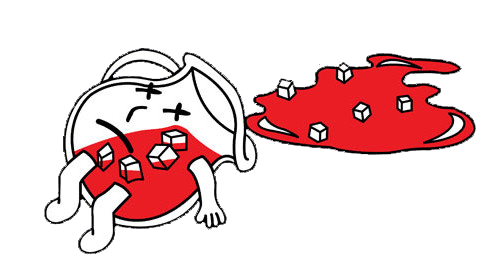
All they Momma's owe me head for wasting my time
 Apr 21·1 replybigpapiD
you watch invincible?
yesss, i finished the comic
- bigpapiD 🦉Apr 21coldfire
I had a Philly cheesesteak from Capriotti’s my brother, you don’t wanna see this
trust me you don't know how bad I want too
 Apr 21·1 reply
Who is everyone crying about today?
 Apr 21·1 replyhttps://twitter.com/i/status/2046621347355173091
 Sarpanchsaab
Shutup you fat a******
- bigpapiD 🦉Apr 21·1 replyyour fav gal
yesss, i finished the comic
man why thragg p\*\*\*\* out at first and run. then why didn't he snap nolan and mark

 Apr 21
Nigga wrote a whole novel
- Apr 21Blue Magic
How Long Until Drake’s Iceman Sculpture Melts? A Quantum Physicist Weighs In
In a rare break from federally suspect gambling promotion, Drake has announced his return to music by erecting a giant ice sculpture in a Toronto car park. After a sporadic and drawn-out campaign of vague teasers for a new album called Iceman, the rarely understated rapper unveiled a stack of frozen bricks at 81 Bond Street yesterday (April 20), promising that the release date is hidden inside. How long it might take the sculpture to melt is a question beyond the ken of the Pitchfork news team. To get to the bottom of the matter, we rushed off some questions to a theoretical quantum physicist at the University of Toronto: one Professor Valentin Crépel.
We expected Professor Crépel to humor us, but he came prepared, calculating an estimate based on the standard size of a parking space in Toronto (citation provided) and a comparison to average human height. “If the structure were fully solid, this would correspond to roughly 350 tons of ice!” he enthused. “In practice, the structure is almost certainly partially hollow—either deliberately, or because of voids between stacked blocks—so the true mass is lower. Even so, it is almost certainly above 200 tons.” That equates to roughly 2,000 slot machines, or enough ice to make well over a million Onda Civics.
Melting that by force would be no simple task. “Roughly 70 gigajoules” is Crépel’s estimate of the necessary energy—“comparable to the annual energy consumption of a Toronto household or to the energy released by 15 tons of TNT” (*not a suggestion). Even this, we are warned, “is a strict lower bound, obtained from the latent heat of fusion of ice to water.” Here the professor linked us to a Wikipedia page for “enthalpy of fusion.” We will assume he knows what he’s talking about.
As such, “estimating the melt time for a structure like this is inherently uncertain.” Nonetheless, he conceded, we did not come here to hedge our bets. We came here to separate the three main sources of heat that will affect the sculpture—namely solar radiation, convection of ambient air, and rain—and come out swinging with a “reasonable and conservative estimate” that accounts for “uncertainties and inefficiencies.” Science!
The professor thus predicted that the structure will remain for at least two weeks. At this stage of the calculation, however, mere thermodynamics fall short. Anticipation for Drake’s first solo record since 2023’s For All the Dogs (not to mention the ensuing Kendrick Lamar feud) is such that fans have already taken matters into their own mittens. We sent the professor footage of mischief-makers smashing pickaxes against the sculpture and trying to kill it with fire. What followed was a comprehensive guide to arctic vandalism. Flames? “Surprisingly ineffective!” They “lose most of their thermal energy to the surrounding air,” the professor explained. Keep your paltry pocket lighters sheathed, would-be saboteurs. Used for a full minute, they “would only melt a few grams of ice at best.”
This leaves the small but lethal matter of chipping and breaking. “Not only does it directly remove ice by the kilogram,” Crépel wrote, “but it also increases surface roughness, which in turn enhances both solar and convective heat transfer.” A literal chink, that is, in the sculpture’s armor. Might human touch pose a similar threat to the sculpture’s integrity? Insofar as one can in an email, Professor Crépel scoffed. “Thermally irrelevant.”
Physics, then, suggests the sculpture’s life expectancy is roughly in keeping with Drake’s lengthy Iceman rollout, giving him more time to swan around Toronto in his Packers jacket. Local police have now cordoned off the sculpture to prevent more people with literal flamethrowers showing up to raise hell. Crépel, meanwhile, continues to operate as a theoretical quantum physicist. His opinions, as far as he knows, do not reflect those of the University of Toronto.
2 weeks to melt
- Apr 21·1 replyBlue Magic
How Long Until Drake’s Iceman Sculpture Melts? A Quantum Physicist Weighs In
In a rare break from federally suspect gambling promotion, Drake has announced his return to music by erecting a giant ice sculpture in a Toronto car park. After a sporadic and drawn-out campaign of vague teasers for a new album called Iceman, the rarely understated rapper unveiled a stack of frozen bricks at 81 Bond Street yesterday (April 20), promising that the release date is hidden inside. How long it might take the sculpture to melt is a question beyond the ken of the Pitchfork news team. To get to the bottom of the matter, we rushed off some questions to a theoretical quantum physicist at the University of Toronto: one Professor Valentin Crépel.
We expected Professor Crépel to humor us, but he came prepared, calculating an estimate based on the standard size of a parking space in Toronto (citation provided) and a comparison to average human height. “If the structure were fully solid, this would correspond to roughly 350 tons of ice!” he enthused. “In practice, the structure is almost certainly partially hollow—either deliberately, or because of voids between stacked blocks—so the true mass is lower. Even so, it is almost certainly above 200 tons.” That equates to roughly 2,000 slot machines, or enough ice to make well over a million Onda Civics.
Melting that by force would be no simple task. “Roughly 70 gigajoules” is Crépel’s estimate of the necessary energy—“comparable to the annual energy consumption of a Toronto household or to the energy released by 15 tons of TNT” (*not a suggestion). Even this, we are warned, “is a strict lower bound, obtained from the latent heat of fusion of ice to water.” Here the professor linked us to a Wikipedia page for “enthalpy of fusion.” We will assume he knows what he’s talking about.
As such, “estimating the melt time for a structure like this is inherently uncertain.” Nonetheless, he conceded, we did not come here to hedge our bets. We came here to separate the three main sources of heat that will affect the sculpture—namely solar radiation, convection of ambient air, and rain—and come out swinging with a “reasonable and conservative estimate” that accounts for “uncertainties and inefficiencies.” Science!
The professor thus predicted that the structure will remain for at least two weeks. At this stage of the calculation, however, mere thermodynamics fall short. Anticipation for Drake’s first solo record since 2023’s For All the Dogs (not to mention the ensuing Kendrick Lamar feud) is such that fans have already taken matters into their own mittens. We sent the professor footage of mischief-makers smashing pickaxes against the sculpture and trying to kill it with fire. What followed was a comprehensive guide to arctic vandalism. Flames? “Surprisingly ineffective!” They “lose most of their thermal energy to the surrounding air,” the professor explained. Keep your paltry pocket lighters sheathed, would-be saboteurs. Used for a full minute, they “would only melt a few grams of ice at best.”
This leaves the small but lethal matter of chipping and breaking. “Not only does it directly remove ice by the kilogram,” Crépel wrote, “but it also increases surface roughness, which in turn enhances both solar and convective heat transfer.” A literal chink, that is, in the sculpture’s armor. Might human touch pose a similar threat to the sculpture’s integrity? Insofar as one can in an email, Professor Crépel scoffed. “Thermally irrelevant.”
Physics, then, suggests the sculpture’s life expectancy is roughly in keeping with Drake’s lengthy Iceman rollout, giving him more time to swan around Toronto in his Packers jacket. Local police have now cordoned off the sculpture to prevent more people with literal flamethrowers showing up to raise hell. Crépel, meanwhile, continues to operate as a theoretical quantum physicist. His opinions, as far as he knows, do not reflect those of the University of Toronto.
2 weeks to melt
yall believe that quantum whatever dude or me? Ice is melting in 3-5 days

- Apr 21Dr Lee PhD
Who is everyone crying about today?
f*** u
 Apr 21
 ninachop

Vind dit leuk.
 Apr 21·1 reply
No disrespect to 6 God but my version of Passionfruit starts after the intro. I love this song mane