 Aug 20, 2025·edited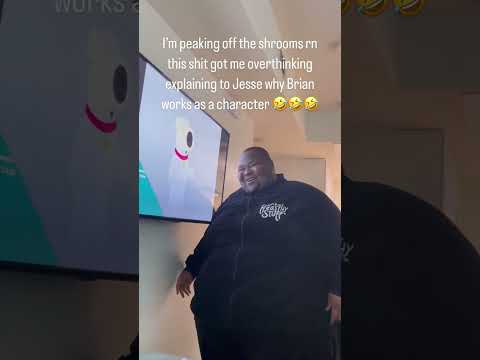
 Aug 20, 2025
This nigga a genius
 Aug 20, 2025
genius
 Aug 20, 2025
He's bigger than the TV
 Aug 20, 2025
brian is a dog. what is there to explain?
 Aug 20, 2025·2 replies
He need to break down some calories
 GTA VI 🤩Aug 20, 2025
This is dead ass how niggas be talking off shrooms lmaoo
 Aug 20, 2025
nigga stop poking my tv
- Aug 20, 2025
he right tho
 Aug 20, 2025·3 replies
I see Dave Blunts subscribes to Kant’s theory of incongruity. That is, he believes comedy arises from the clash between what we expect and what we get. Brian is constructed as a person: he speaks fluent English, drinks martinis, dates women, has existential crises. But when he suddenly does dog behaviour (chasing a ball, barking at the door, licking himself), there’s a jarring incongruity between his cultural identity (urbane intellectual) and his species identity (a household pet). The incongruity provokes laughter because it violates our expectation. This is what Dave is explaining
Although Dave also touches on a similar theory which I subscribe to: Hobbes’ superiority theory. Brian positions himself as more rational and cultured than the Griffins (e.g. mocking Peter’s stupidity). When Brian suddenly acts like an ordinary dog, we experience a collapse of that superiority: he isn’t above them after all. His regression to instinct allows the viewer to laugh from a position of superiority: we’re reminded that beneath his pretension, he’s “just a dog.”
 RASIE 🎣Aug 20, 2025·2 replies
Where the f*** he find velour tracksuits that big?
 Aug 20, 2025
ayo dave you did it again, you a genius
 Aug 20, 2025
it kills me whenever Brian barks and runs away. every time
 lil ufo 🛸Aug 20, 2025
 Aug 20, 2025Three Meows Mór
I see Dave Blunts subscribes to Kant’s theory of incongruity. That is, he believes comedy arises from the clash between what we expect and what we get. Brian is constructed as a person: he speaks fluent English, drinks martinis, dates women, has existential crises. But when he suddenly does dog behaviour (chasing a ball, barking at the door, licking himself), there’s a jarring incongruity between his cultural identity (urbane intellectual) and his species identity (a household pet). The incongruity provokes laughter because it violates our expectation. This is what Dave is explaining
Although Dave also touches on a similar theory which I subscribe to: Hobbes’ superiority theory. Brian positions himself as more rational and cultured than the Griffins (e.g. mocking Peter’s stupidity). When Brian suddenly acts like an ordinary dog, we experience a collapse of that superiority: he isn’t above them after all. His regression to instinct allows the viewer to laugh from a position of superiority: we’re reminded that beneath his pretension, he’s “just a dog.”
Astute observation!
 Aug 20, 2025
i would kick this nigga out of my crib with quickness if he touching my TV like that
 Aug 20, 2025RASIE
Where the f*** he find velour tracksuits that big?
Custom
 Aug 20, 2025SyIIabIes
He need to break down some calories
 mishima 😈Aug 20, 2025
How deep does his belly button go
 Aug 20, 2025SyIIabIes
He need to break down some calories
Great post
 Aug 20, 2025·1 reply
made a tv look like a tablet
- Aug 20, 2025FOMOmortis
made a tv look like a tablet
 Aug 30, 2025Three Meows Mór
I see Dave Blunts subscribes to Kant’s theory of incongruity. That is, he believes comedy arises from the clash between what we expect and what we get. Brian is constructed as a person: he speaks fluent English, drinks martinis, dates women, has existential crises. But when he suddenly does dog behaviour (chasing a ball, barking at the door, licking himself), there’s a jarring incongruity between his cultural identity (urbane intellectual) and his species identity (a household pet). The incongruity provokes laughter because it violates our expectation. This is what Dave is explaining
Although Dave also touches on a similar theory which I subscribe to: Hobbes’ superiority theory. Brian positions himself as more rational and cultured than the Griffins (e.g. mocking Peter’s stupidity). When Brian suddenly acts like an ordinary dog, we experience a collapse of that superiority: he isn’t above them after all. His regression to instinct allows the viewer to laugh from a position of superiority: we’re reminded that beneath his pretension, he’s “just a dog.”
 Aug 30, 2025
i swear he took this bit from someone else
 Aug 30, 2025
every time i see this nigga I'm astounded by how big he is. its like every time i see him is the first time
