 CARMEN 💜Jan 19
Animator Spotlight: Takumi Sunakohara


- CARMEN 💜Jan 19·edited
All gifs in order:
Hybrid x Heart Magias Academy Araxia (2016)
Fate/Apocrypha (2017)
Darling in the Franxx Episode 15 (2018) explosions by Sejoon Kim or another animator
FLCL Progressive (2018)
Darling in the Franxx Episode 24 (2018)
Mob Psycho Season 2 Episode 4 (2019)
Mob Psycho Season 2 Episode 5 (2019)
Mob Psycho Season 2 Episode 11 (2019)
Fate/Grand Order Divine Realm of the Round Table: Paladin - Camelot Agateram (2021)
Jujutsu Kaisen Season 2 Episode 13 (2023) SB/ED/AD/LO only
Jujutsu Kaisen Season 2 Episode 17 (2023) first cut Hakuyu Go, third cut Kazuto Arai (albeit heavily influenced by Sunakohara) - CARMEN 💜Jan 19
Happy Belated Birthday Takumi Sunakohara born January 8th, 1995. Originally serving as an inbetweener at Studio Trigger with friend Kazuto Arai, both animators broke off from Trigger’s grasp and became freelance effects wizards. Next to Arai, Sunakohara comes across as the more idiosyncratic persona. Commonly employing explosions, Kutsuna lightning, and other grab bags of tricks, nothing what Sunakohara does is that unusual for a digital artist of his era. What is unusual is Sunakohara dealing out much slower animation on 3s and 4s to convey the pace of his scenes, and illustrating effects in extreme detail. Sunakohara is often placed very closely to Arai, with the two appearing on a number of tv anime episodes together, more significantly with episodes directed by Hakuyu Go, with their animation fitting his epic and grand storyboards. While he doesn’t have the bigger output when compared to Arai, Sunakohara is an often overlooked and I would argue underrated animator in the foe 2nd wave webgen category of animators. They have carved out a niche lane for themselves, and not many other animators can touch their style.
- CARMEN 💜Jan 19
Sunakohara first got his start as an in-betweener on many episodes Kill La Kill working alongside younger staff at Studio Trigger. On Anilist Sunakohara is credited as one of the soul main in-betweeners. While at Trigger, Sunakohara made a quick acquaintance with Kazuto Arai, with their first credited work was on Yozakura Quartet Hana no Uta. Sunakohara’s earliest key animation appears on Yu-Gi-Oh! Arc-V. Sunakohara handles brief scenes with explosion effects, showing off some promising hand drawn volumetric smoke likely inspired by Yoh Yoshinari
- CARMEN 💜Jan 19
From 2013-2015, Sunakohara spent a time handling minor low priority cuts up until Date A Live Mayuri Judgement where we see Sunakohara a few short cuts embracing lightning effects, more so inspired by Hidetsugu Ito this time around. Sunakohara made a brief appearance on Concrete Revolutio Episode 4, and their animation is semi-difficult to identify given how inconsistent their style was around this time, but I believe they handled the first 8 seconds of this scene.
- CARMEN 💜Jan 19
On One-Punch Man Season 1, Sunakohara was able to join a tight nit group of animators on Episode 4 & 11. The two main thru lines of the episodes were animators Toshiyuki Sato, Itsuki Tsuchigami aka Leaf, and Hakuyu Go. Almost the entirety of Paradisers sequence was handled by this team in Episode 4. Go handles the portion where Speed O Sonic slices through the Hammerhead forces (under AD by Gosei Oda) and then Sunakohara handles Hammerhead’s anger. Miso, Sato, and Sunakohara then return for Episode 11. Again it is very hard to identify Sunakohara’s animation here, but I think he handles the final cut of this scene
- CARMEN 💜Jan 19
Sunakohara then comes into 2016 swinging on Ooya San Wa Shishunki, a mini episode series directed by Yuki Ogawa. Given the bite size 2 minute nature of these episodes, animation for them was usually handled by one person. Atsuki Shimizu and Akira Hamaguchi were the more vetted solo animators, with China, Naoki Miyajima, and Sunakohara being the new young talent. Sunakohara’s episode isn’t resplendent in KA (unlike Hamaguchi’s episode), but it does have one scene with him employing Kutsuna Lightning in a key sequence.
- CARMEN 💜Jan 19
We then get to My Hero Academia. Miyajima, Miso, among many others from Bones One-Punch Man division would show up here to make a name for themselves. On Episode 2 of the show, Go, Miso, Miyajima, and Sunakohara all appear. Go & Miso handle the famous scene of Deku attempting to save Tatsuki from the Sludge Villain. After All Might defeats the enemy, Sunakohara presumably animates the scene of him deflating.
Moving on to Episode 12, marks Hakuyu Go’s directorial debut as an action animator, storyboard artist, and episode director. Reserved mainly for the battle portion at the ending, the entire portion showcases Go’s skillful delegation of his team. Rather than having one animator labour over an entire scene, Go carefully assigns animators to key moments best exemplifying their strongest attributes. Many of the aforementioned regulars with Go are present here, except for Sato, though Hironori Tanaka does make a key appearance here.
This also the first time Arai and Sunakohara would reunite within the several years them being split on different projects. Unlike Arai’s explosion bit, Sunakohara mostly handled character acting within his scene. - CARMEN 💜Jan 19
The earliest show to get Sunakohara some recognition would be on Hybrid x Heart Magias Academy Ataraxia joined by Arai and Miyajima.

Given Yuki Ogawa’s involvement in the series, Miyajima and Sunakohara were here to flex more of their skills, with Arai. While more under the radar than Sunakohara’s previous series, this show would be critical in his development as a digital artist. Both Arai and Sunakohara, began to to experiment more with a hybrid approach between digital and hand drawn animation. This would give their effects a more loser feel, and also allow them to add more layers, rather than succumbing to limitations of paper.
On Episode 1 Sunakohara shows traces of his early self with some Yoshinari-esque cross beam effects, then transitioning into full digital expressionistic lightning effects.
We see the full breadth of the hybrid approach, with computerized beam effects and then hand drawn explosions, both done with a lot of confidence.Episode 4 contains some of Sunakohara’s best animation up to this point in his career. In this air battle scene we see Sunakohara embrace typical modern day Itano-isms taking everything from Mitsuo Iso to Shuichi Kaneko.
The frame modulation for this sequence is frankly ridiculous, in the opening missile firing sequence we see Sunakohara modulate from 2s in the first cut to 1s in the second. When the first robot is destroyed we see a flurry of Kutsuna Lightning and sparks on 1s, and hand drawn explosion. When the next wave of robots destroyed Sunakohara switches to a digital explosion on 3s, with the sparks and lightning on 1s. The final cut is one aspect of Sunakohara’s animation that differentiates him about from other Itano style animators. The small ball shaped explosions are a common trait in Itano style animation, the only difference is Sunakohara draws more than usually accepted. He also allows for small squiggly imperfections of the digital animation not make completely rounded shapes.Episode 8 we get a nice battle between two characters, with Sunakohara and other animators showcasing insane effects. I believe the first half of this sequence is handled by Kazuto Arai, and Yoshihara prospect Toru Iwazawa, with Sunakohara taking up everything after the hand shift.
Nothing in this scene was too out of the ordinary for Sunakohara, but the final explosion showcases a new approach for him. Animating on 4s we get an extremely slow and jank looking explosion. There’s an intentional auteur touch here, with blacked out debris and multiple overlapping cell layers of a very Kaneko-esque explosion.
The penultimate cut is also very revealing. We see small scribbly sprite debris, and falling smoke plumes signifying more solid heavy debris but not actually showing the components. Again this is all on 4s giving a jerky, and uncanny feel.The genga material lets you really see just how much that explosion changed everything about Sunakohara’s style.
- CARMEN 💜Jan 19
Around the same time Sunakohara joined Arai on Mob Psycho 100 Episode 3. Sunakohara takes up a brief psychic effect scene while Arai’s action scene had him leveling up as an action animator. Sunakohara would join China on Episode 3 of Tatsuya Yoshihara’s The Long Riders. Again I’m one for guessing, but I believe Sunakohara did character acting on the opening scene, one of the only portions not felt by China’s corrections. Sunakohara’s work on Saenai Heroine saw him animating more passive character scenes. While I don’t think this kind of animation is his strong suit, he puts his heart into it.
- CARMEN 💜Jan 19·edited
Sunakohara would regroup with Arai on Hakuyu Go’s legendary Episode 22 of Fate/Apocrypha. I’ve already said my piece about this episode a number of times, but the igniting force of the Karna vs Siegfried fight is Sunakohara
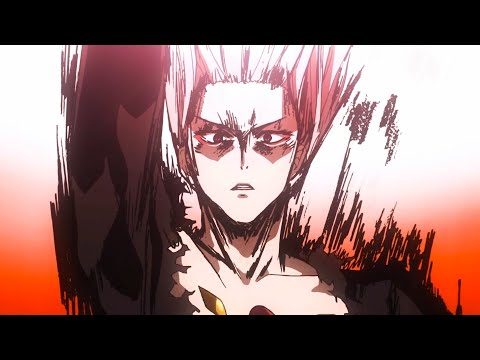
Every bit of this sequence is mind bending cinema thanks to Go’s storyboards, but Sunakohara’s portion might be be the most electric (pun intended). We open with top down background cut of animation, not by any means easy to do, but Sunakohara is on top here. A giant ring shape impact is revealed, with moving rock formations in the foreground making the composition much more appealing. The rock slice by Siegfried is simply incredible. Sunakohara shows every aspect of his effects in that cut, from the smoke and debris, to the flurry of Kutsuna Lightning breaking up the shield, and with the rock getting sliced Sunakohara shows the lightning affect the interior of the formation. We then move to a cut of Karna throwing down swords enveloped in Kutsuna Lightning, and again I am amazed by the sheer amount of cell layers in these cuts. It moves like butter.
- CARMEN 💜Jan 19
Sunakohara carefully parsed out their schedule with the busiest two year period of their career, first returning to Trigger on Darling in the Franxx in 2018.

Sunakohara took up a duel role here, while he was busy in some brief effects sequences, he spent more time laboring over character cuts. Episode 4 has some surprisingly advanced fabric animation for a usual special effects laden guy like him. Episode 7 has Sunakohara handling a pivotal beach scene. The way the cast in the scene moves is fairly reserved, and when your cut is nuzzled before Kazutaka Sugiyama and Keisuke Kobayashi’s scenes that is a pretty tall order. On 8 Sunakohara returns to action delivering a bizarre beam attack sequence, warped with squiggly energy balls and atmospheric particle effects. Sejoon Kim (likely acquaintances from back on One Punch Man) assists with the explosions. The final cuts Sunakohara lent his hand to show further development into his effects
Episode 22 has a brief but eye catching sequence of a giant mech laying waste to hundreds of enemy ships. The way this is portrayed with an infinite amount of Itano ball explosions with added flare effects to kick it into overdrive
These are hundreds of cell layers - CARMEN 💜Jan 19
While Franxx was airing, Sunakohara contributing a few cuts to the FLCL Progressive ending animation. Go, Miso, and others contributed to this sequence and Sunakohara’s portion is the busiest.
First we open with a hand palming a ball of light, and the way in which goes about portraying the energy is pretty experimental. The smearing outline of the hand conveys the idea quickly that the energy is much more powerful than feasibly possible.


Once the hand is able to cup the ball we get these thick shaded outlines that congregate towards the center of the hand where the energy is contained. By the end the anterior shading disappears entirely. We get some nice cross flares, and again dozens of cell layers. Sunakohara gives way to a massive starry explosion, with particles that closely resemble firecrackers..

- CARMEN 💜Jan 19
2019 would be the final years of constant Sunakohara output for a while, coming to a focal point on Mob Psycho 100 Season 2.

With Go, Miso, Arai, and Sunakohara’s involvement billowing in little ways on Season 1 it became inevitable that the friends would return three years later. While Miso was a frequent animator on the season the small cadre would slowly return back to their chairs for the Mogami mini Arc. First Sunakohara shows up on Episode 4, which is simply insane. In this flashback scene Dimple attacks Mogami with a volley energy beams, more impressive is the close quarter background animation Sunakohara is subjected to.With a heavier emphasis on impact frames, we can see more layers of black and white centering on a focal point, which is not unusual but Sunakohara does give them his special flavor.


After Mogami anti’s Dimple’s attack we get an imploding energy effect emphasized by more impact frames, and weird contouring particles. I do like how Mogami’s deflection contorts and destroys Dimple’s body in the process. This is one of the few scenes where I feel Sunakohara intentionally neglected to use any Kutsuna Lightning as with two otherworldly beings fighting more clerical yet unsettling effects are required.


- CARMEN 💜Jan 19
Episode 5 is the big one, Hakuyu Go’s third strike at the director’s chair and might be his most awe-inspiring, and ominous. The first half of the episode is centered around this nightmare world testing to see if the lead character would break under scrutiny. After breaking free from the false reality, Mob and Mogami break into psychic battle. The walls of world break down entirely making room for Inception sized scale, without any of the limitations of live action. Sunakohara found himself in the sky line battle between Mob and the spirit apparitions that Mogami had conjured. The bulk of the battle was handled by Go, Miso, and Miyajima. Sunakohara is placed right after Miyajima with a giant spirit attempting an energy blast.
Safe to say the design of the creature was heavily inspired by the God Warriors from Nausicaa. The smoke effects here are incredible, and the cut of Mob descending into the mouth once again shows Sunakohara drawing shaded focal lines that indicate an incomprehensible amount of power being tossed around.
The resulting explosion is mostly animated on 3s and 4s, with dozens of layers per usual.
It is important to note that all of the background drawings art is complemented by Sunakohara’s hand too, showing the sheer versatility of such a beast of an artist. The granular clarity of their art cannot be understated. - CARMEN 💜Jan 19
Moving on to Episode 11, this was Miso’s shot at a full fledged action director. Sunakohara is placed on one of the earlier portions of a fight between Mob and one of the Ultimate 5 members Minegashi and Claw 5 henchmen.
This entire sequence flows differently when put against other Sunakohara scenes, due to the strong reliance on Miso’s storyboards and layouts. Many of Sunakohara’s creeping smoke particles are included, and one thing about Miso direction is he maintains a strong concept of environment within the fight. In 40 seconds we get Mob knocked through several buildings whilst in a rotating background all done in a single take. We then are followed by a bunch of mini single takes with Mob on the ropes against giant plants. Sunakohara in some shots, goes into detail to animate the roots. Same can be said for the debris particles.Sunakohara appears on Episode 12 in a few uncredited explosions shots (likely brought on by Kerroira). Particularly fond of the cuts of Claw reigning beams down on the heroes.
