 Feb 15, 2025·1 reply


- Feb 15, 2025


 Mar 27, 2025🤖
!dream giant 2007 Graduation album Murakami branded laptop that say KTT2
 Apr 20, 2025🤖
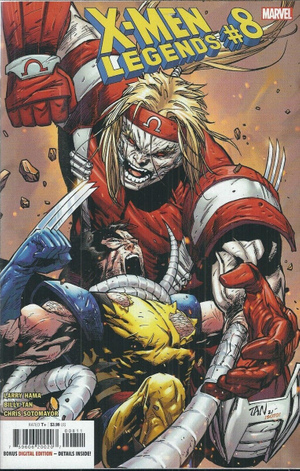
!dream "Create a vibrant, spiritually symbolic artwork inspired by Yoruba traditions. The scene features a regal Black woman in profile view, facing right, with a tall, intricately woven traditional hairstyle adorned with beads, symbolizing her connection to her ancestors. Her skin glows with a subtle golden hue, and her expression is serene and wise, reflecting inner peace and spiritual guidance. She wears large, ornate earrings and a beaded necklace, representing her connection to the Òrìṣà (Yoruba deities). Behind her is a large, radiant orange circle, symbolizing the sun or a divine aura, with warm red and yellow hues blending into it. The background is a textured, abstract mix of black and white, with scribbled patterns that evoke the energy of the spiritual realm (Orun). Subtle, ethereal figures or symbols of ancestors (eégún) and spirit guides (Ẹgbẹ́) faintly emerge from the background, their forms blending into the texture. The overall style is bold and expressive, with a mix of modern abstract art and traditional Yoruba cultural elements, emphasizing the themes of spiritual guidance, ancestral wisdom, and divine connection. The artwork should feel dynamic and sacred, with a balance of vibrant colors and intricate textures.
 Apr 21, 2025bigdíckgirl666
Ill
 May 17, 2025🤖
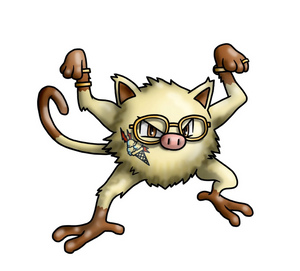
!dream big silver tooth with blood dripping off
 May 22, 2025🤖
!dream ktt2 has ai image creation again
- Aug 3, 2025🤖
!dream Pinhead, hellraiser,cinematic ,realistic ,full detaill ,hellish, cenobite, DARK colors" a masterpiece, 8k resolution, dark fantasy concept art, by Greg Rutkowski, dynamic lighting, hyperdetailed, intricately detailed, Splash screen art, trending on Artstation, deep color, Unreal
 May 18🤖
!dream test
 May 19
Lowkey miss this, was definitely a time
- Jul 17
My idea for a unsupervised clip model
We use 2 sets of image/text encoders
The first maps text/image pairs into the latent space. Then we do another text image pair. IF BOTH the text and image in the second set are close to their corresponding previous text/image from the last input, we make the soft assumption that the last 2 pairs are each from similar concepts as the current pair. This means the last 2 images are similar and the last 2 text are similar, however we cannot assume that this means the text and image are similar across modalities
Now, after meeting the condition described in the last paragraph, we run the most recent image/text pair thru the second set of image/text encoders and if the image and text are close in this latent space we assume that they belong to the same concept
Heres the hard part
We would next assign both of these points to a gaussian mixture model where the nearest gaussian to the paired text/image embedding would be updated to move towards that pairThe idea is, if two pairs of image/text embeddings are similar within modality it means 2 things
1. The image and image are similar, and the text text are similar
2. Its possible that the text and image are similar, thats why we use a second encoder set because we use it to test if the text and image are similar and if they are we update its parameters to push them closerNow the GMM is necessary to actually cluster the concepts, its expectation maximization, it will learn the shape of concept distributions in the latent space
Now we also need to know that these encoders start random, so its possible at early stages we might think the text/image pair are similar when theyre not. The gaussians are to control for that, after millions of iterations they should find the true clusters in the latent space
The only thing im worried about is how large such a model is and if gaussians are powerful enough for this
Also, this is effectively a GAN version of a transformer/CLIP model
- Jul 17
Ok so i dont know if my idea would work unless maybe if u only do the EM with the GMM if both the current and previous pairs of text/image map to the same latent space location, by that i mean all 4 points have to map, i cant remember why this works but i think it does
- Jul 17·1 reply
I will figure this out
I have other ideas but theyre weirder
- Jul 27Hazyeyefreakmonstr
I will figure this out
I have other ideas but theyre weirder
So i got a new idea
Basically you use a factorgraph where your pretrained cross modal embeddings are run thru factors (small neural networks) and these factors tell you the probability of seeing each input data point. You then update these factors under the assumption that whatever probabilities they output are correct
This is similar to my previous idea in that we are using latent space estimation to derive the concept space, however its much simpler and without those unnecessary rules